Wednesday, December 31, 2008

Sunday, December 28, 2008
Asiaten Hotel
During our sortie in Tarlac City for the culmination of the Emergency Employment Project of DepEd, we were booked at the Asiaten Hotel owned by Mr. Danilo Asiaten. Set in the heart of a residential subdivision, the hotel presents a cozy relaxed atmosphere away from the noise of the highway plied by North-bound buses and private vehicles 24/7.

Converted from being a school compound into a residential hotel, the two-level U-shaped Asiaten Hotel looks like an apartment complex with a large communal area in the middle.

Near the gate is the reception area where guests can check in or out 24 hours a day. Manned by helpful and courteous staff, each guest is greeted with a smile and advised of amenities available or problems at hand - we were informed the night we arrived that there will be a power and water cut-off from 7am to 9am the following day.

Though the parking space may be limited, a security guard ensures the safety of vehicles parked outside the compound. Not to mention the fact that it is inside a secure residential area with little or no non-resident traffic.

A poolside restaurant adds to the comfortable and relaxing breakfast. They serve Filipino, Continental, and other dishes to clients. They get your order for breakfast before bed time including the time you wish to have them so it can be fresh and ready by the time you take your seat on the iron and rattan chairs with your laptop on checking your morning email through the free wi-fi internet connection provided.
I hope to visit Tarlac again in the future in a more personal time to truly savor the soothing ambiance of the Asiaten Hotel.
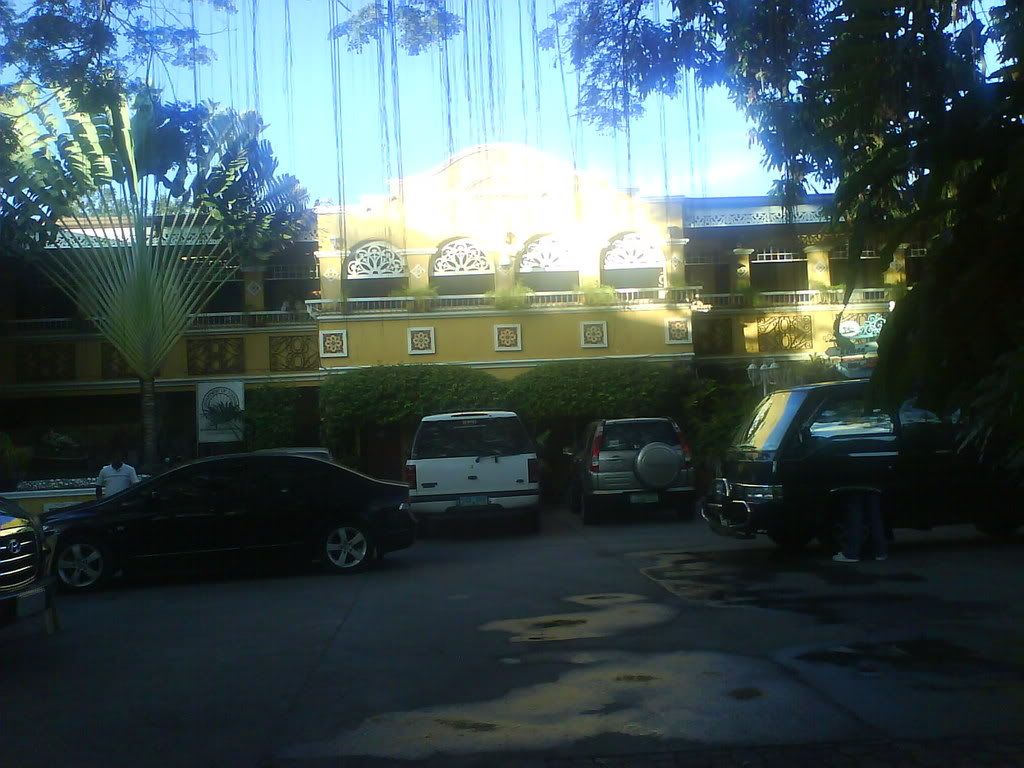
Converted from being a school compound into a residential hotel, the two-level U-shaped Asiaten Hotel looks like an apartment complex with a large communal area in the middle.
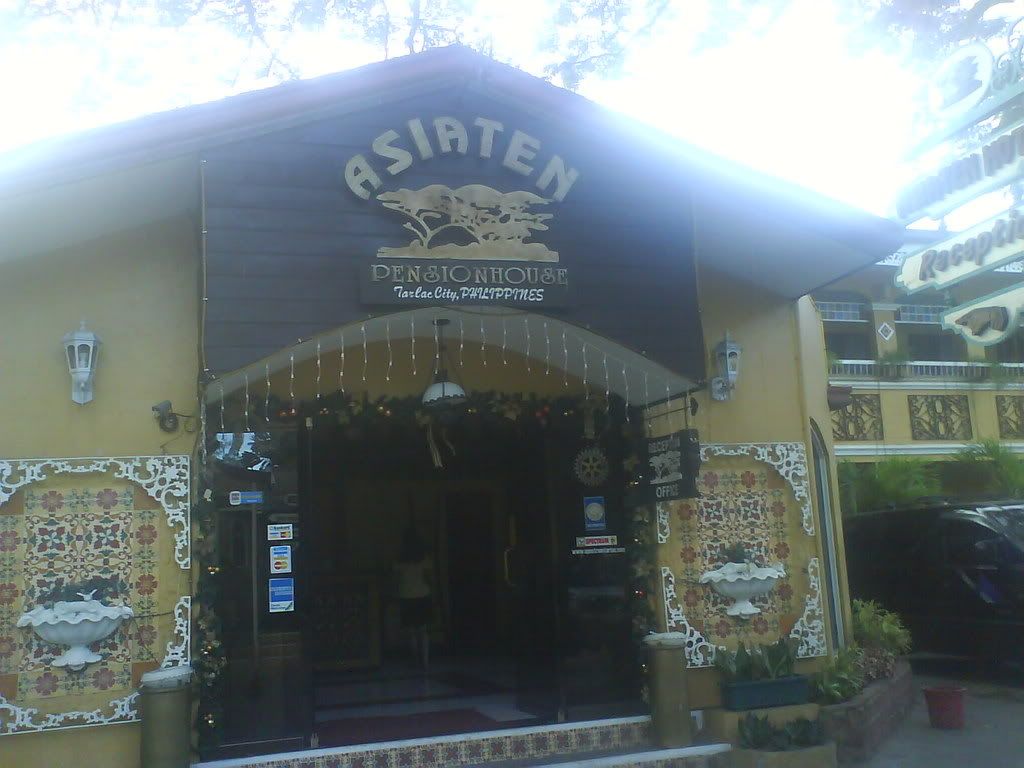
Near the gate is the reception area where guests can check in or out 24 hours a day. Manned by helpful and courteous staff, each guest is greeted with a smile and advised of amenities available or problems at hand - we were informed the night we arrived that there will be a power and water cut-off from 7am to 9am the following day.
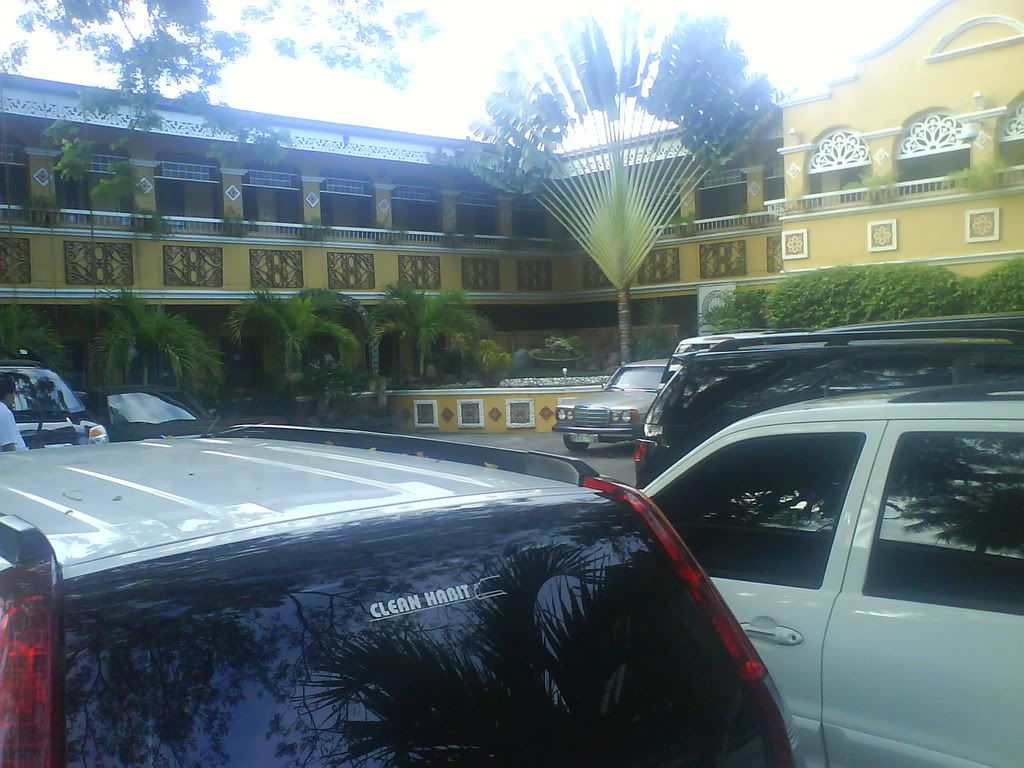
Though the parking space may be limited, a security guard ensures the safety of vehicles parked outside the compound. Not to mention the fact that it is inside a secure residential area with little or no non-resident traffic.
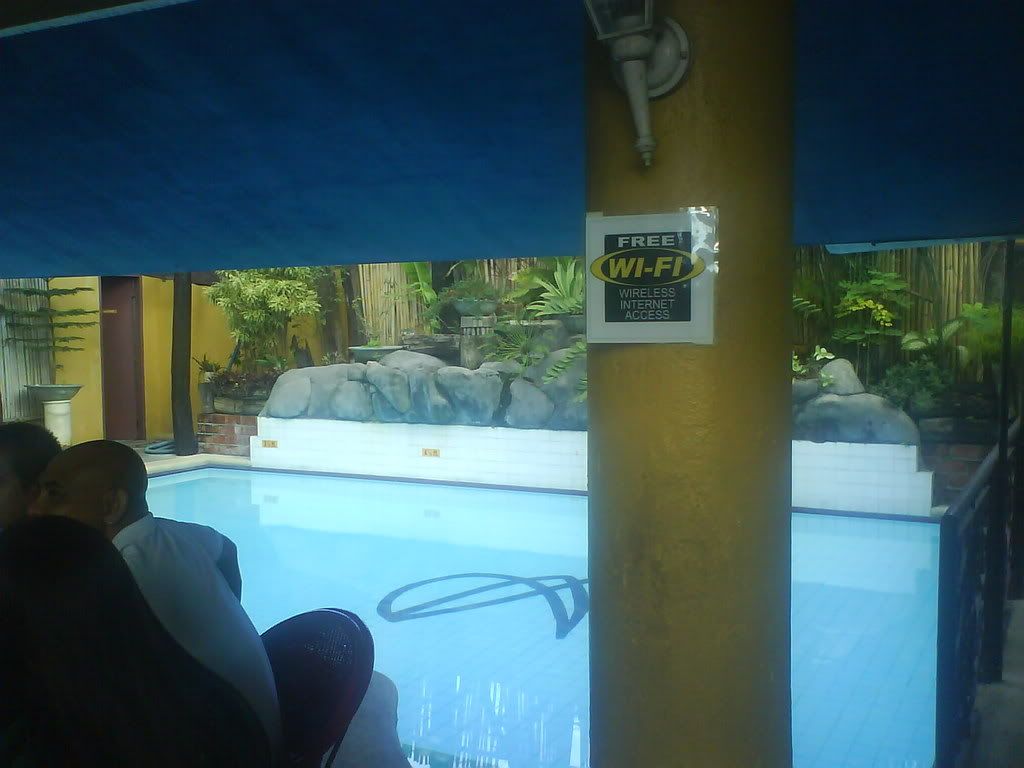
A poolside restaurant adds to the comfortable and relaxing breakfast. They serve Filipino, Continental, and other dishes to clients. They get your order for breakfast before bed time including the time you wish to have them so it can be fresh and ready by the time you take your seat on the iron and rattan chairs with your laptop on checking your morning email through the free wi-fi internet connection provided.
I hope to visit Tarlac again in the future in a more personal time to truly savor the soothing ambiance of the Asiaten Hotel.
Thursday, December 25, 2008
Friday, December 5, 2008
Memory gap
During a recent trip to Baguio City, I observed that the conductors of buses seem to have a good memory of who owns which luggage.
During pre-departure, the conductor receives the bags of the passengers and ask them where they are getting off. He then arranges the luggage depending of the passenger's destination. So how can he be sure that the passenger handling or taking off a luggage is the same passenger? In my observation, he commits them to memory.
As he receives a luggage, he looks at the face of the passenger and at the luggage. It is here where I believe he makes a mental note connecting the passenger to the luggage. Theft can happen when during stops, a passenger takes somebody else's luggage from the compartment. The bus companies seem to be able to avoid this by limiting access to the compartments to the conductor. The driver never opens the compartment.
If a passenger wishes to take something from their luggage, it is the conductor who opens the compartment and observes the passenger. I think during this time the conductor tries to retrieve the face-to-luggage connection he made earlier.
So far, I have not witnessed any theft of luggages during a provincial trip with Victory Liner.
During pre-departure, the conductor receives the bags of the passengers and ask them where they are getting off. He then arranges the luggage depending of the passenger's destination. So how can he be sure that the passenger handling or taking off a luggage is the same passenger? In my observation, he commits them to memory.
As he receives a luggage, he looks at the face of the passenger and at the luggage. It is here where I believe he makes a mental note connecting the passenger to the luggage. Theft can happen when during stops, a passenger takes somebody else's luggage from the compartment. The bus companies seem to be able to avoid this by limiting access to the compartments to the conductor. The driver never opens the compartment.
If a passenger wishes to take something from their luggage, it is the conductor who opens the compartment and observes the passenger. I think during this time the conductor tries to retrieve the face-to-luggage connection he made earlier.
So far, I have not witnessed any theft of luggages during a provincial trip with Victory Liner.
Sunday, November 30, 2008
Hybrid public transport
During a trip to the Municipality of Lubang in the island of Lubang, Occidental Mindoro, I chanced upon this hybrid public transport:

This is a tricycle that carries the body of a jeepney. It has two seats in front and two two-person seats facing each other at the back. Its 'hood' resembles that of a jeepney including headlights, radiator grill, bumper, crash bar and vertical posts.
I haven't really tried riding one because we were on a tight schedule and I was the designated photographer at the time. The next chance I could get to visit Lubang and stay longer, I will make it a point to ride one.
Lubang Island has two municipalities divided by a mountain range. The other town is Looc. The only ways to get to Lubang from anywhere in the Philippines including mainland Mindoro is from Manila via Roll-on, Roll-off ships, a medium sized wooden ferry, a not so often 60-person commercial flight via AirLink, and chartered planes.

Lubang is so isolated and inaccessible that crime rate is down to zero and the land and its beaches still virtually virgins.

If you do plan to visit Lubang, please be sure to have a mobile phone using SMART telecom as there are no other service providers in the island.


This is a tricycle that carries the body of a jeepney. It has two seats in front and two two-person seats facing each other at the back. Its 'hood' resembles that of a jeepney including headlights, radiator grill, bumper, crash bar and vertical posts.
I haven't really tried riding one because we were on a tight schedule and I was the designated photographer at the time. The next chance I could get to visit Lubang and stay longer, I will make it a point to ride one.
Lubang Island has two municipalities divided by a mountain range. The other town is Looc. The only ways to get to Lubang from anywhere in the Philippines including mainland Mindoro is from Manila via Roll-on, Roll-off ships, a medium sized wooden ferry, a not so often 60-person commercial flight via AirLink, and chartered planes.

Lubang is so isolated and inaccessible that crime rate is down to zero and the land and its beaches still virtually virgins.
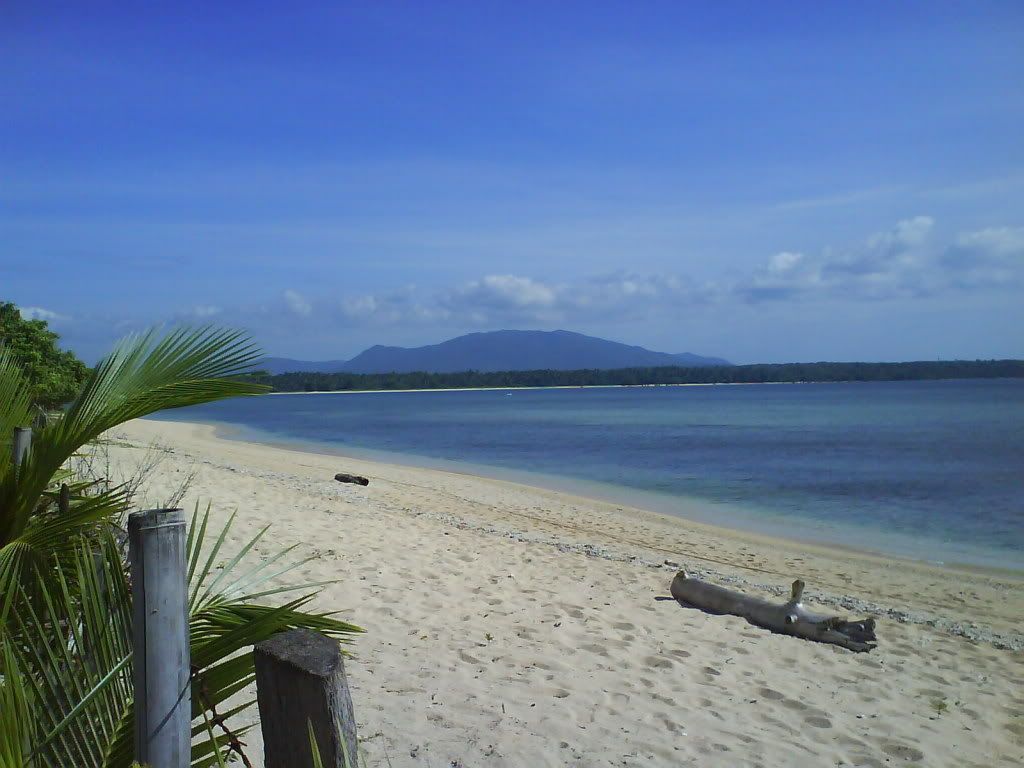
If you do plan to visit Lubang, please be sure to have a mobile phone using SMART telecom as there are no other service providers in the island.

Sunday, November 2, 2008
Cagayan de Oro and Bukidnon
I got a chance to be on an official visit to Cagayan de Oro City and Bukidnon a couple of weeks back.
Upon arrival at Lumbia Airport in Cagayan de Oro City, we had a quick breakfast at Koresko Hotel in the outskirts of the city before returning to the airport once again.
From there, we took a light plane (a Helio Courier I believe is the name) owned by the Summer Institute of Linguistics. SIL has a language center in Nasuli, Bukidnon and operates the light plane to ferry their linguists from one tribal center to the other.
I noticed during take-off that the plane was parked beside some assets of our Philippine Air Force based in Cagayan de Oro City.
Among our humble air assets are:

MG-520 attack helicopters,

UH-1H helicopters and OV-10 Bronco counter-insurgency aircrafts.
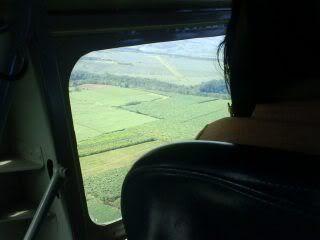
As we took the 45-minute flight to Malaybalay, Bukidnon, I can't help but appreciate the beauty of the Misamis Oriental and Bukidnon landscape.
I am amazed by the shaping of the lands by shallow rivers - that I believe to be the venue of the popular white water rafting.

There are, of course some farm lands that abound the area. They farm almost every crop from rice, to corn, to bananas, to pineapples.

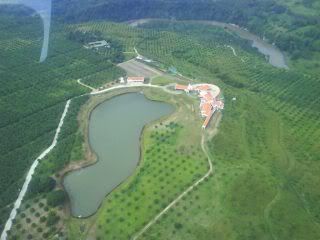
Others even built their on inland resorts (I think) on these untouched lands whose access roads remain to be dirt roads.

In Bukidnon, we met with local officials, teachers, parents, and students and distributed the LGU-private sector led, and later DepEd supported, Essential Health Care Packages. These packages include toothbrush and toothpastes for oral health care, solid and liquid soaps for hand washing, and medicines for de-worming.
Later that day (and after a butt-aching 2 hour drive through winding - twists and turns sharply - road), Cagayan de Oro City's representative to Congress (one of two that they have) suggested adding a fourth component of the package - a feeding program. He suggest that kids with clean teeth, clean hands, and worm-less tummies are not complete without proper meal.
In the evening we stayed at the simple yet comfortable Discovery Hotel and Restaurant located near the Mallberry Suites Business Hotel and Robinsons Cagayan de Oro.
It was a wonderful experience to see CDO and Bukidnon. I get to meet its people, savor some of its delicious local delicacies and (ehem!) flirt with its ladies (just some smiles, winks and small talks and nothing else).
You should see it for yourself.
Upon arrival at Lumbia Airport in Cagayan de Oro City, we had a quick breakfast at Koresko Hotel in the outskirts of the city before returning to the airport once again.
From there, we took a light plane (a Helio Courier I believe is the name) owned by the Summer Institute of Linguistics. SIL has a language center in Nasuli, Bukidnon and operates the light plane to ferry their linguists from one tribal center to the other.
I noticed during take-off that the plane was parked beside some assets of our Philippine Air Force based in Cagayan de Oro City.
Among our humble air assets are:
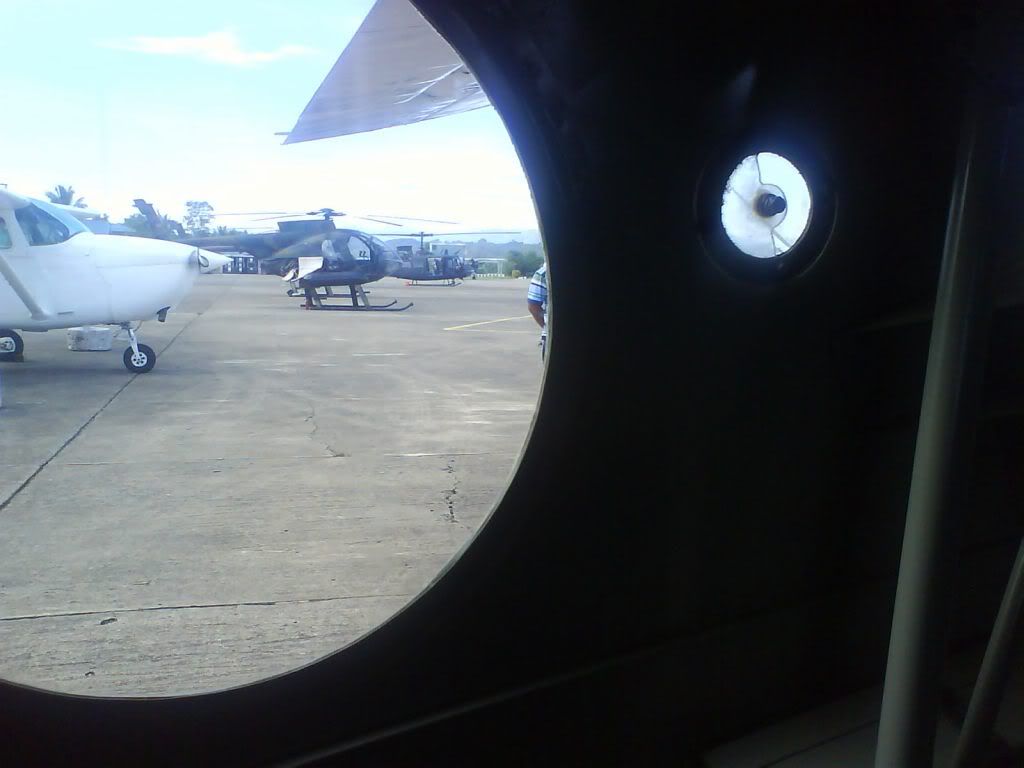
MG-520 attack helicopters,
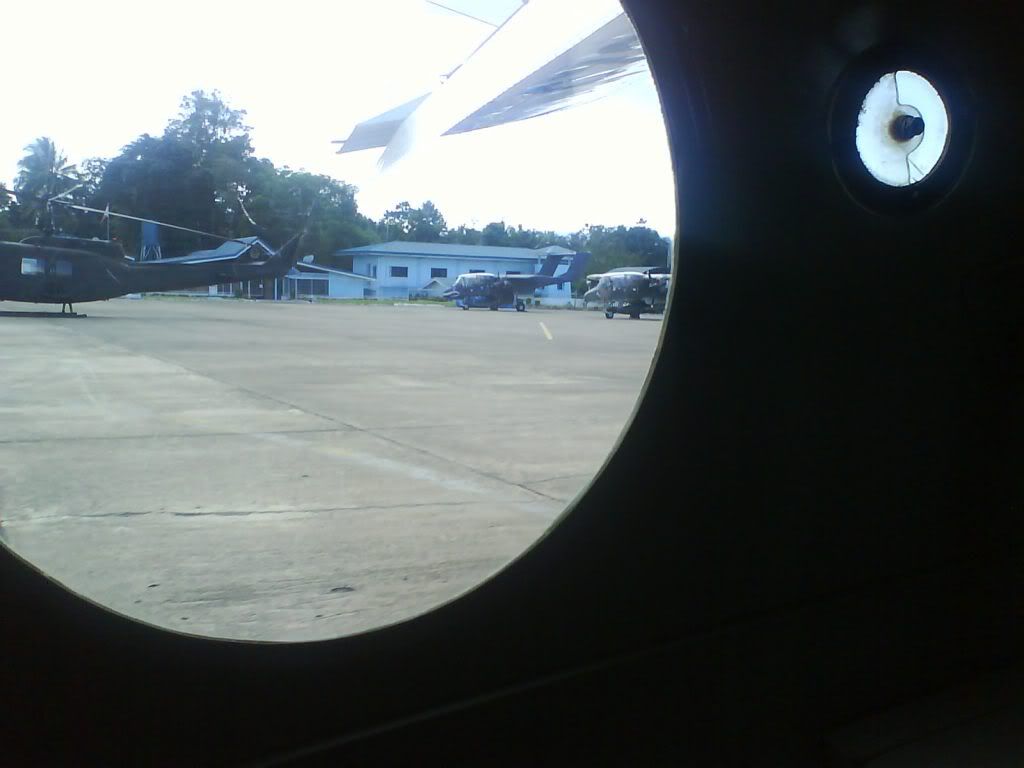
UH-1H helicopters and OV-10 Bronco counter-insurgency aircrafts.
As we took the 45-minute flight to Malaybalay, Bukidnon, I can't help but appreciate the beauty of the Misamis Oriental and Bukidnon landscape.
I am amazed by the shaping of the lands by shallow rivers - that I believe to be the venue of the popular white water rafting.
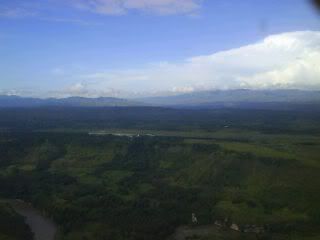
There are, of course some farm lands that abound the area. They farm almost every crop from rice, to corn, to bananas, to pineapples.
Others even built their on inland resorts (I think) on these untouched lands whose access roads remain to be dirt roads.
In Bukidnon, we met with local officials, teachers, parents, and students and distributed the LGU-private sector led, and later DepEd supported, Essential Health Care Packages. These packages include toothbrush and toothpastes for oral health care, solid and liquid soaps for hand washing, and medicines for de-worming.
Later that day (and after a butt-aching 2 hour drive through winding - twists and turns sharply - road), Cagayan de Oro City's representative to Congress (one of two that they have) suggested adding a fourth component of the package - a feeding program. He suggest that kids with clean teeth, clean hands, and worm-less tummies are not complete without proper meal.
In the evening we stayed at the simple yet comfortable Discovery Hotel and Restaurant located near the Mallberry Suites Business Hotel and Robinsons Cagayan de Oro.
It was a wonderful experience to see CDO and Bukidnon. I get to meet its people, savor some of its delicious local delicacies and (ehem!) flirt with its ladies (just some smiles, winks and small talks and nothing else).
You should see it for yourself.
Saturday, October 25, 2008
Generosity in the midst of economic crisis
We often hear public utility drivers whine about increasing fuel prices. They seek increase in fare that are held back by the government. We never hear about their generosity to some passengers who themselves do not have enough cash to pay for their fare due to one reason or another.
In the Philippines, public mass transport is owned by private individuals, groups or companies. Buses and some taxis are company-owned. Jeepneys, most taxis and AUVs are owned by individuals or groups.
For those owned by individuals or groups, drivers are employed on a turn basis - you drive today, you have a day-off tomorrow. Some drive the vehicles everyday. From the earnings of the day, drivers need to pay the owners what we call a boundary (a fixed amount that serves like a rent for driving the vehicle), they spend from that income fuel and repairs when needed. What's left becomes their own personal income that they take home to their families. So, you can see how important it is to them to have a good balance between fare rate and fuel cost.
But like the Filipinos that we are, we tend to be generous even if we have not enough for ourselves or our families. Maybe it is the religious upbringing in most of us or it is our character that makes one a true Filipino.
Just yesterday, I got into an AUV plying the Megamall-Pateros route. When the dispatcher began collecting our fixed P30.00 fare, one passenger seemed confused at how much the fare was. He repeatedly asked the dispatcher how much the fare is and how much the other passengers paid for their fare.
In the end, he conceded that he only has P20.00 with him which puzzled us.
Why did he get on the vehicle when he did not know if he had enough money to pay for the fare? That was the question that ran through my mind, blurted by the dispatcher, and - probably - thought by the other passengers as well.
The passenger never responded. I don't think he even paid for the fare.
And the AUV driver, the good man that he is - God bless him and his family - told the dispatcher to charge the fare to him. The dispatcher agreed and gave the driver his due from the fare collection less one passenger's fare.
I never knew what that guy's problem was. And I am not in the position to ask.
During the ride to Megamall, I remembered when I had the same problem. I took my sister to the sea port for her trip to Iloilo eating lunch on our way. When we were about to part ways at the gate, I gave her extra for some food at the ship (her ticket allows her free meals anyway). All I had left is twelve pesos which I thought will be enough to get me back to Quezon City.
When I paid the fare, I was told that the money I gave is not enough to get me to Quezon City. All my money is tied in my bank account and I did not bring the ATM with me.
I told the driver to drop me off wherever my payment brings me. He just smiled an said not to worry and that he will take me to where I am going. He added that at least, I told him that I did not enough cash unlike other passengers who do not pay the right fare.
God bless that man. And God bless all our PUV drivers who spend their days and nights on the risky streets to feed their families and educate their children.
In the Philippines, public mass transport is owned by private individuals, groups or companies. Buses and some taxis are company-owned. Jeepneys, most taxis and AUVs are owned by individuals or groups.
For those owned by individuals or groups, drivers are employed on a turn basis - you drive today, you have a day-off tomorrow. Some drive the vehicles everyday. From the earnings of the day, drivers need to pay the owners what we call a boundary (a fixed amount that serves like a rent for driving the vehicle), they spend from that income fuel and repairs when needed. What's left becomes their own personal income that they take home to their families. So, you can see how important it is to them to have a good balance between fare rate and fuel cost.
But like the Filipinos that we are, we tend to be generous even if we have not enough for ourselves or our families. Maybe it is the religious upbringing in most of us or it is our character that makes one a true Filipino.
Just yesterday, I got into an AUV plying the Megamall-Pateros route. When the dispatcher began collecting our fixed P30.00 fare, one passenger seemed confused at how much the fare was. He repeatedly asked the dispatcher how much the fare is and how much the other passengers paid for their fare.
In the end, he conceded that he only has P20.00 with him which puzzled us.
Why did he get on the vehicle when he did not know if he had enough money to pay for the fare? That was the question that ran through my mind, blurted by the dispatcher, and - probably - thought by the other passengers as well.
The passenger never responded. I don't think he even paid for the fare.
And the AUV driver, the good man that he is - God bless him and his family - told the dispatcher to charge the fare to him. The dispatcher agreed and gave the driver his due from the fare collection less one passenger's fare.
I never knew what that guy's problem was. And I am not in the position to ask.
During the ride to Megamall, I remembered when I had the same problem. I took my sister to the sea port for her trip to Iloilo eating lunch on our way. When we were about to part ways at the gate, I gave her extra for some food at the ship (her ticket allows her free meals anyway). All I had left is twelve pesos which I thought will be enough to get me back to Quezon City.
When I paid the fare, I was told that the money I gave is not enough to get me to Quezon City. All my money is tied in my bank account and I did not bring the ATM with me.
I told the driver to drop me off wherever my payment brings me. He just smiled an said not to worry and that he will take me to where I am going. He added that at least, I told him that I did not enough cash unlike other passengers who do not pay the right fare.
God bless that man. And God bless all our PUV drivers who spend their days and nights on the risky streets to feed their families and educate their children.
Subscribe to:
Posts (Atom)


