Sunday, November 30, 2008

Hybrid public transport

During a trip to the Municipality of Lubang in the island of Lubang, Occidental Mindoro, I chanced upon this hybrid public transport:


This is a tricycle that carries the body of a jeepney. It has two seats in front and two two-person seats facing each other at the back. Its 'hood' resembles that of a jeepney including headlights, radiator grill, bumper, crash bar and vertical posts.

I haven't really tried riding one because we were on a tight schedule and I was the designated photographer at the time. The next chance I could get to visit Lubang and stay longer, I will make it a point to ride one.

Lubang Island has two municipalities divided by a mountain range. The other town is Looc. The only ways to get to Lubang from anywhere in the Philippines including mainland Mindoro is from Manila via Roll-on, Roll-off ships, a medium sized wooden ferry, a not so often 60-person commercial flight via AirLink, and chartered planes.


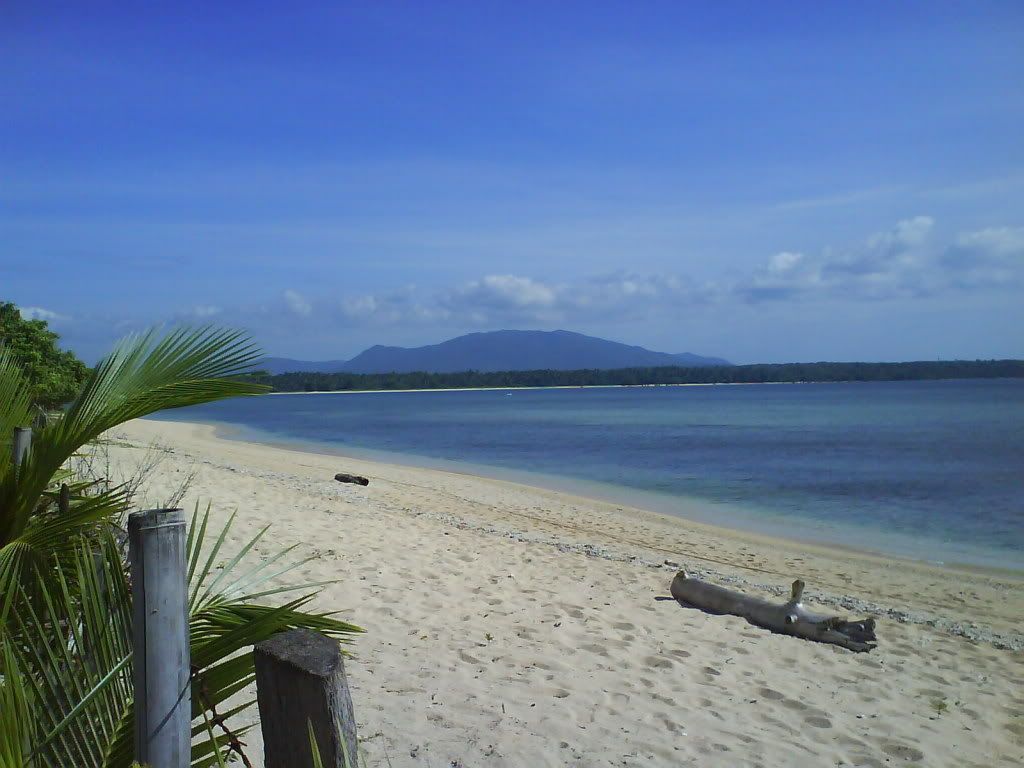
Lubang is so isolated and inaccessible that crime rate is down to zero and the land and its beaches still virtually virgins.


If you do plan to visit Lubang, please be sure to have a mobile phone using SMART telecom as there are no other service providers in the island.


Sunday, November 2, 2008

Cagayan de Oro and Bukidnon

I got a chance to be on an official visit to Cagayan de Oro City and Bukidnon a couple of weeks back.

Upon arrival at Lumbia Airport in Cagayan de Oro City, we had a quick breakfast at Koresko Hotel in the outskirts of the city before returning to the airport once again.

From there, we took a light plane (a Helio Courier I believe is the name) owned by the Summer Institute of Linguistics. SIL has a language center in Nasuli, Bukidnon and operates the light plane to ferry their linguists from one tribal center to the other.

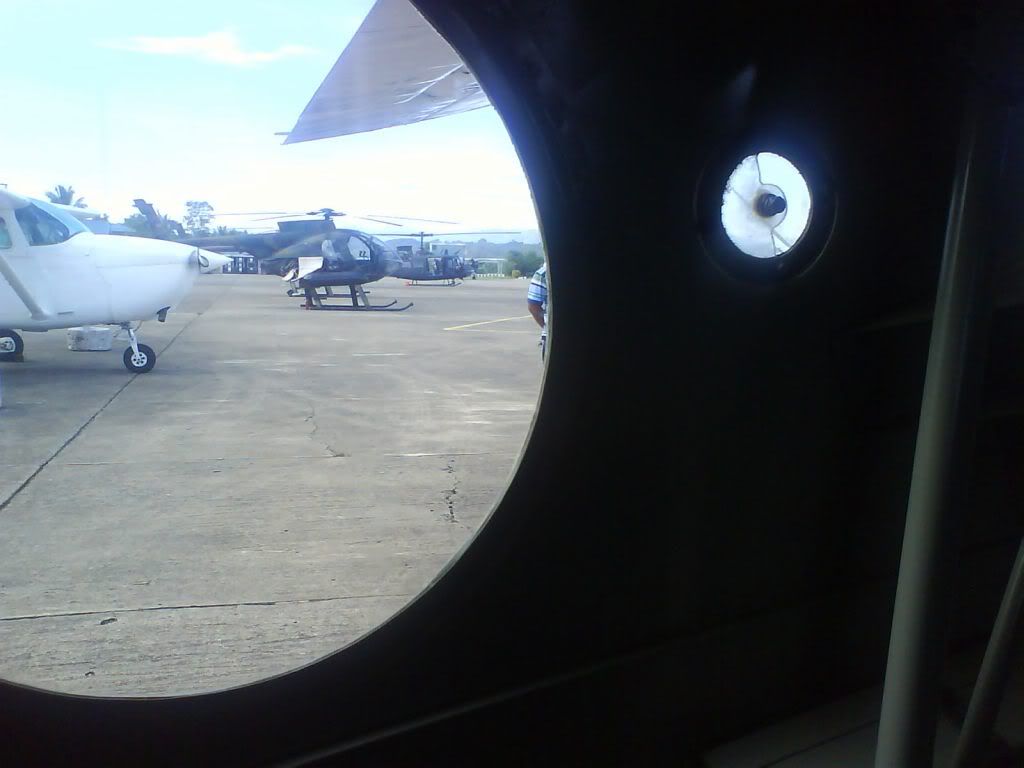
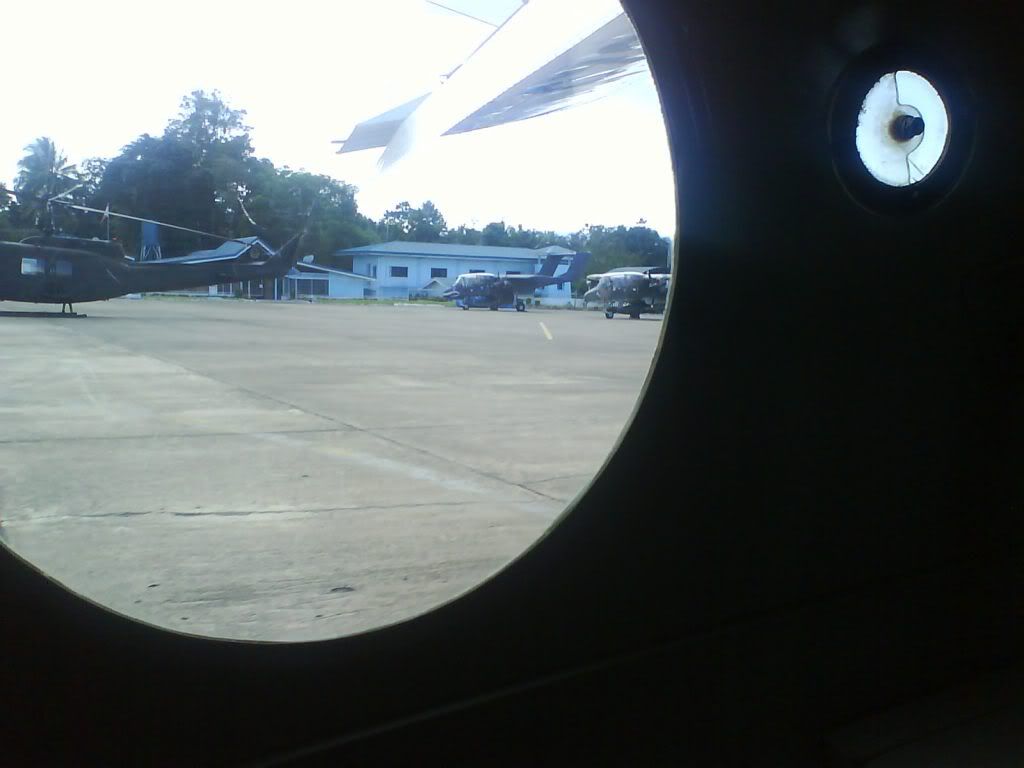
I noticed during take-off that the plane was parked beside some assets of our Philippine Air Force based in Cagayan de Oro City.

Among our humble air assets are:


MG-520 attack helicopters,


UH-1H helicopters and OV-10 Bronco counter-insurgency aircrafts.

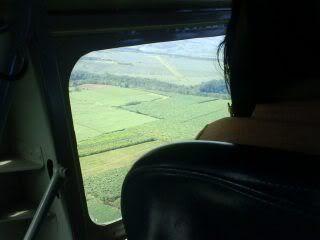
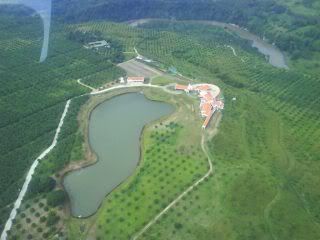
As we took the 45-minute flight to Malaybalay, Bukidnon, I can't help but appreciate the beauty of the Misamis Oriental and Bukidnon landscape.

I am amazed by the shaping of the lands by shallow rivers - that I believe to be the venue of the popular white water rafting.


There are, of course some farm lands that abound the area. They farm almost every crop from rice, to corn, to bananas, to pineapples.


Others even built their on inland resorts (I think) on these untouched lands whose access roads remain to be dirt roads.


In Bukidnon, we met with local officials, teachers, parents, and students and distributed the LGU-private sector led, and later DepEd supported, Essential Health Care Packages. These packages include toothbrush and toothpastes for oral health care, solid and liquid soaps for hand washing, and medicines for de-worming.

Later that day (and after a butt-aching 2 hour drive through winding - twists and turns sharply - road), Cagayan de Oro City's representative to Congress (one of two that they have) suggested adding a fourth component of the package - a feeding program. He suggest that kids with clean teeth, clean hands, and worm-less tummies are not complete without proper meal.

In the evening we stayed at the simple yet comfortable Discovery Hotel and Restaurant located near the Mallberry Suites Business Hotel and Robinsons Cagayan de Oro.

It was a wonderful experience to see CDO and Bukidnon. I get to meet its people, savor some of its delicious local delicacies and (ehem!) flirt with its ladies (just some smiles, winks and small talks and nothing else).

You should see it for yourself.

Saturday, October 25, 2008

Generosity in the midst of economic crisis

We often hear public utility drivers whine about increasing fuel prices. They seek increase in fare that are held back by the government. We never hear about their generosity to some passengers who themselves do not have enough cash to pay for their fare due to one reason or another.

In the Philippines, public mass transport is owned by private individuals, groups or companies. Buses and some taxis are company-owned. Jeepneys, most taxis and AUVs are owned by individuals or groups.

For those owned by individuals or groups, drivers are employed on a turn basis - you drive today, you have a day-off tomorrow. Some drive the vehicles everyday. From the earnings of the day, drivers need to pay the owners what we call a boundary (a fixed amount that serves like a rent for driving the vehicle), they spend from that income fuel and repairs when needed. What's left becomes their own personal income that they take home to their families. So, you can see how important it is to them to have a good balance between fare rate and fuel cost.

But like the Filipinos that we are, we tend to be generous even if we have not enough for ourselves or our families. Maybe it is the religious upbringing in most of us or it is our character that makes one a true Filipino.

Just yesterday, I got into an AUV plying the Megamall-Pateros route. When the dispatcher began collecting our fixed P30.00 fare, one passenger seemed confused at how much the fare was. He repeatedly asked the dispatcher how much the fare is and how much the other passengers paid for their fare.

In the end, he conceded that he only has P20.00 with him which puzzled us.

Why did he get on the vehicle when he did not know if he had enough money to pay for the fare? That was the question that ran through my mind, blurted by the dispatcher, and - probably - thought by the other passengers as well.

The passenger never responded. I don't think he even paid for the fare.

And the AUV driver, the good man that he is - God bless him and his family - told the dispatcher to charge the fare to him. The dispatcher agreed and gave the driver his due from the fare collection less one passenger's fare.

I never knew what that guy's problem was. And I am not in the position to ask.

During the ride to Megamall, I remembered when I had the same problem. I took my sister to the sea port for her trip to Iloilo eating lunch on our way. When we were about to part ways at the gate, I gave her extra for some food at the ship (her ticket allows her free meals anyway). All I had left is twelve pesos which I thought will be enough to get me back to Quezon City.

When I paid the fare, I was told that the money I gave is not enough to get me to Quezon City. All my money is tied in my bank account and I did not bring the ATM with me.

I told the driver to drop me off wherever my payment brings me. He just smiled an said not to worry and that he will take me to where I am going. He added that at least, I told him that I did not enough cash unlike other passengers who do not pay the right fare.

God bless that man. And God bless all our PUV drivers who spend their days and nights on the risky streets to feed their families and educate their children.

Tuesday, September 16, 2008

Tacloban City

I went ahead the Secretary for the 33rd Founding Anniversary of DepEd Region VIII in Tacloban City. The actual venue of the celebrations is the DepEd Regional Office in Palo, Leyte.

When I arrived at the airport, I got to see the new planes used by the Philippine Airlines for their PAL Express flights. This one came from Cebu direct to Tacloban.

While in Leyte, I was booked by the regional office in Mac Arthur Park hotel now managed by the Philippine Tourism Authority.


In the evening of the first day, I was treated to dinner at the Ocho Seafood and Grill restaurant.

There they have fresh seafoods for customers to choose from. Once you pick a fish, you tell them how you want them cooked or ask them for the best way to serve your meal. I had plentiful and it was fun.

Cebu City travel

Last September 8 to 11, I went on a trip to Cebu City for the 3rd National ICTs in Education Congress hosted by the Foundation for Information Technology Education and Development Incorporated (FIT-ED) with the Department of Education (DepEd) Philippines.

It is the first time I truly saw Cebu. The last time I was there for a management committee meeting, I only got glimpses of the place.

Mactan-Cebu International Airport is, I believe, the smallest International Airport I have seen.

We stayed in a dormitory at the DepEd Eco-Tech Center in Lahug Cebu City.

It was a pretty nice place almost similar to the cottages of the Baguio Teachers' Camp - commented one of the reporters who were with us.

The rooms were quite cozy and are affordable at about P270.00 per night sans meals.

Why eat indoors when you can try some of the fine food outside? Just a few meters from the gate, there are makeshift stalls that serve regular and exotic meals.

Romy, the driver assigned to assist us told of servings of eels and grasshoppers in the stalls.

Unfortunately, we only learned about this during our drive to the airport for our return trip.

Traffic jam

On my way home this evening I witnessed a traffic jam that I could only used to imagine. I'm afraid I was unable to get a photo as the drivers and commuters may get offended. They are after all caught in a jam while in the middle of their excitement to get home.

But I did get a snap shot from Google Earth and drew some lines using GIMP image editor of my Linux OS on the place as what I have seen.

This jam is so tight the traffic enforcers may need to be creative enough to untangle it. And I can only ask you to imagine. Just imagine the line of vehicles on all lanes reaching back from about 200 meters to as long as a kilometer.

And everyone has only one thought in mind: to get home as soon as possible. And I mean everyone including those who caused the jam.

Thursday, August 14, 2008

Solutions to rising fuel cost

On my way home one night, I got to ride shotgun with the jeepney driver. I found out that the driver is not merely a hired help but the son of the owner of the jeepney. The vehicle we are riding is their source of income. And it helped finance the college study of the boy.

The topic of our discussion went around the prospect of father and son to minimize overhead cost that is fuel. At that time, diesel prices were running at about 55 to 56 pesos per liter.

A leading means of coping with rising fuel prices is conversion of vehicle engines to liquefied petroleum gas burning ones. Since that solution only works for lighter vehicles with lighter loads like taxis, the key to saving on fuel for this family is converting their diesel engine so it can run on biodiesel.

I learned from the driver that the government is actually offering jeepney owners a P450,000 loan to have their engines replaces with custom biodiesel consuming engines. The amount also includes components like specialized fuel tanks and pipes and other engine parts.

Another option is a much cheaper refit costing only P50,000 pesos.

As a graduate of marine engineering, the driver knows some of the advantages and disadvantages of having a new set of engines and doing a simple refit.

While I forgot all about the pros and cons of the solutions, I was able to remember the thoughts of the driver on his father's plan to buy a new jeepney instead.

To him, a refit or a new engine beats buying a new jeep. First among his considerations is the cost. He thought they can save hundreds of thousands with a new engine and some minor repairs on the chassis and the body.

The move of the government to assist owners of public utility vehicles is, at best, a noble one. But I believe, the government can do better. With all the minds, skills, and experiences at its disposal, they could have come up with a better solution.

Sure, fuel cost is affected by rising world oil prices and fluctuations of the dollar but a solution will always present itself. The govern should just take a closer look at things and have an open mind. What they should keep closed are their thoughts to having prospective campaign sponsors from big oil companies whose reservoir of black gold is almost drained.